
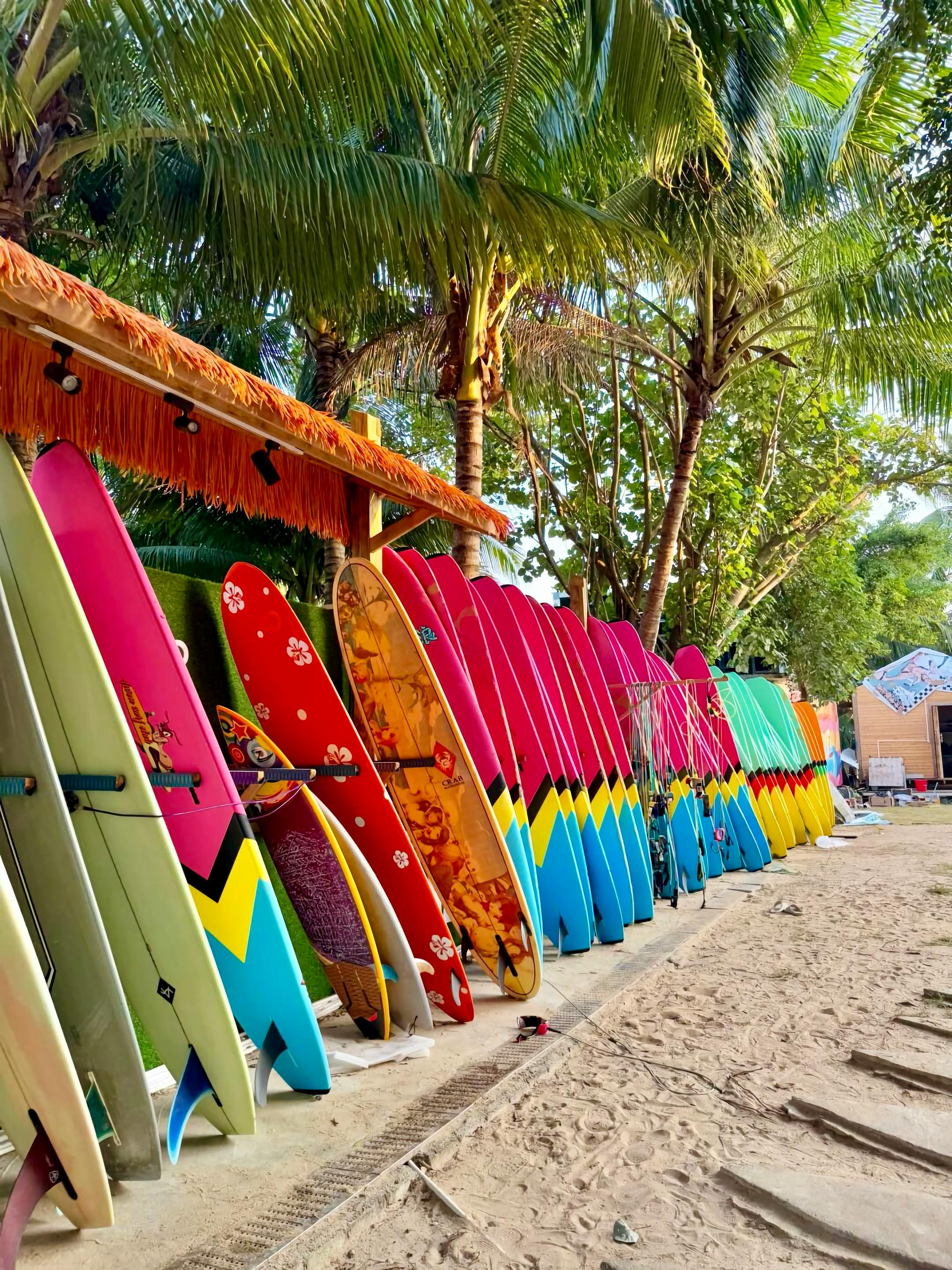
Bali was not always a surf destination. For centuries the ocean was the domain of fishermen and ceremony — a sacred space where offerings were floated out to sea and the gods were thanked for calm waters. Then, in the 1930s, a handful of traveling surfers discovered that the same reefs the Balinese had revered for generations also produced some of the best waves on the planet. Two worlds met in the lineup, and something beautiful happened: they merged.
The Early Days
The first surfers to ride Balinese waves were Australian and American travelers who had heard rumors of perfect reef breaks with nobody on them. They arrived with single-fin longboards and no wetsuits, guided by local fishermen who thought they were completely mad. By the 1970s, word had spread through the global surf community. Uluwatu became a pilgrimage site. Padang Padang entered the collective imagination. And a new generation of Balinese kids grew up watching these visitors glide across waves that had been breaking, unsurfed, since the beginning of time.
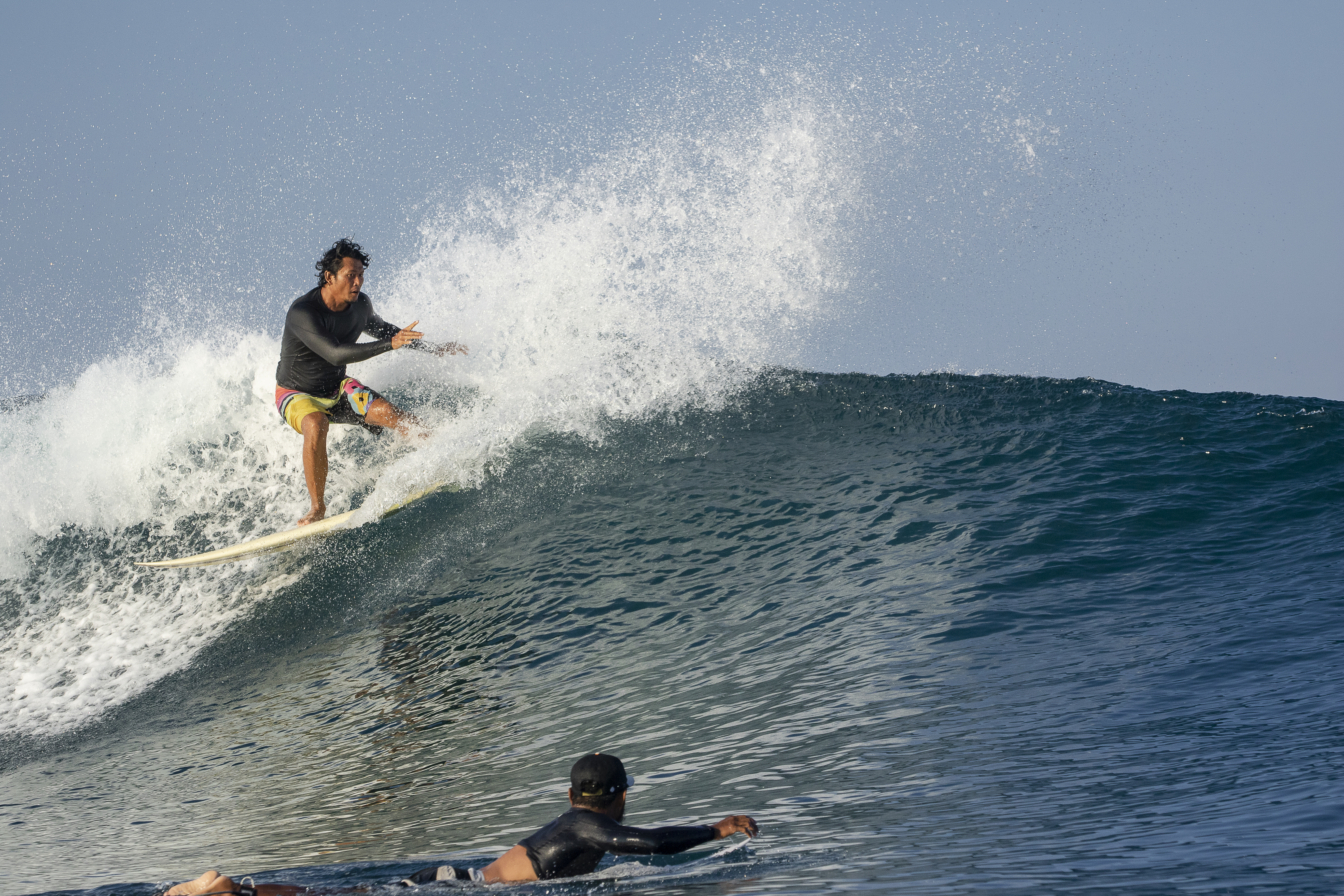
Surf Culture Meets Balinese Tradition
What makes Bali different from other surf destinations is the spiritual layer underneath everything. Before a competition at Keramas, there is a ceremony. Before a new surf school opens, there are offerings. Balinese Hinduism teaches that the ocean is a living entity deserving of respect, and that philosophy has shaped how local surfers approach the water. You will not find aggressive localism at most Balinese breaks. Instead, there is a quiet understanding: the wave was here before us, and it will be here after us. Our job is to enjoy it gratefully.
In Bali, we do not own the waves. The ocean lets us borrow them for a moment. That is enough.
— Gerson, Bali Kami instructor
The Groms
Walk down to any beach break in Bali at dawn and you will see them: kids no older than eight or nine, riding waves that would intimidate most adult beginners. These groms — young surfers — are the future of Balinese surfing. Many of them come from fishing families. They learned to swim before they could walk and picked up surfing by borrowing broken boards from the local rental shops. Some will go on to compete internationally. Others will become instructors, guides, or board shapers. All of them carry the salt water in their veins.
Surf Etiquette the Balinese Way
- Smile and greet other surfers in the lineup — a simple nod goes a long way
- Do not drop in on someone already riding a wave
- Respect the locals who surf the spot every day — they know it better than you
- Pick up any trash you see on the beach, even if it is not yours
- If someone gives you a wave, give one back later in the session
Why It Matters
Understanding the culture behind the waves makes the experience richer. When you paddle out at Kuta Reef with a Bali Kami instructor, you are not just learning a sport — you are stepping into a tradition that stretches back decades. Our instructors grew up on these waves. They know which reef produces the best left on a southwest swell, which warung makes the best nasi campur after a session, and which temple to visit when the ocean feels particularly generous. That local knowledge is something no app or forecast site can replicate.